
A century of scented legacy – Fragonard “100 ans de parfum” exhibition, Grasse

Dear readers, visiting Grasse — a small town in the south of France — may not be the first choice for certain travellers seeking the glamour of the French Riviera; the region offers plenty of more obvious destinations, from the grand hotels of Cannes to the sunlit elegance of Saint-Tropez. Yet for perfume lovers and connoisseurs, Grasse possesses an almost sacred significance. Recognised as an historic centre of French perfumery, Grasse is celebrated for its centuries-old expertise, its flower cultivation, and its network of growers, perfumers, and production houses. The town’s fragrant heritage remains very much alive, and a number of luxury fragrance houses continue to source flowers and other natural ingredients from the region.
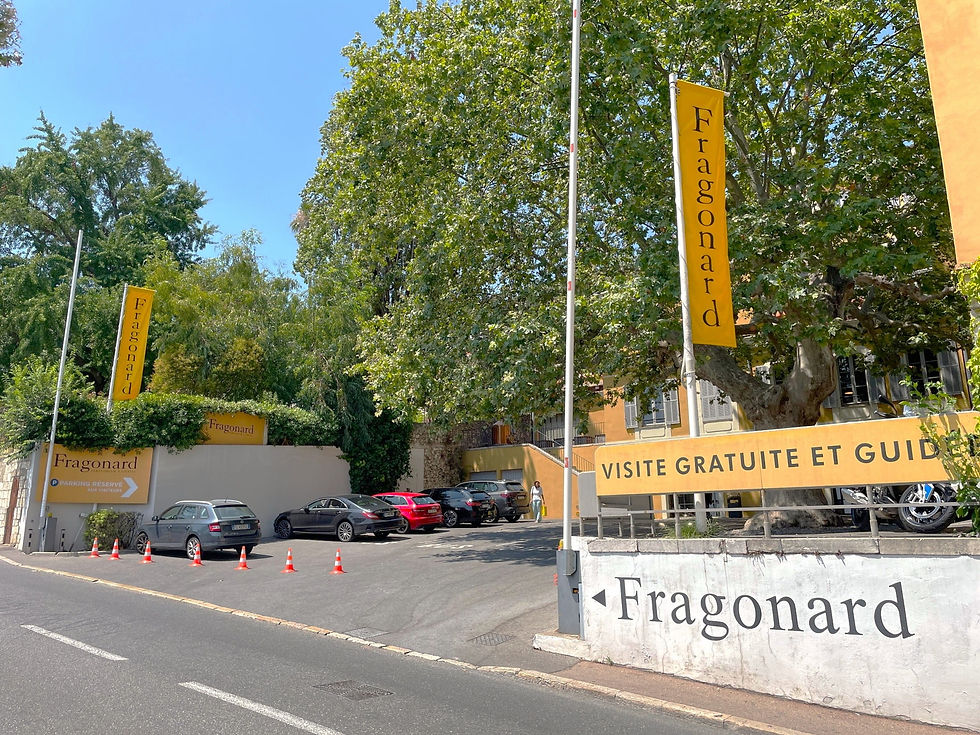
I have visited Grasse twice before; each time the town has left a lasting impression on me, and there always seems to be a meaningful reason to return. On my previous visits, I created my own perfume blends at two different perfume houses. This time, however, I wanted to experience Grasse in a different way. Rather than composing a new fragrance, I went to see an exhibition celebrating the town’s enduring perfume legacy. Those who have followed my blog may remember a previous one about the coffee-table book titled “Fragonard: The Perfume of Provence”, that book made a particular impression on me, and I had been thinking about visiting the maison’s exhibition “100 ans de parfum”, or “100 Years of Perfume” in English, at Fragonard’s Historic Factory in Grasse. When the opportunity arose to meet a potential supplier there back in July, I finally had the perfect reason to return and to experience this special exhibition in person.
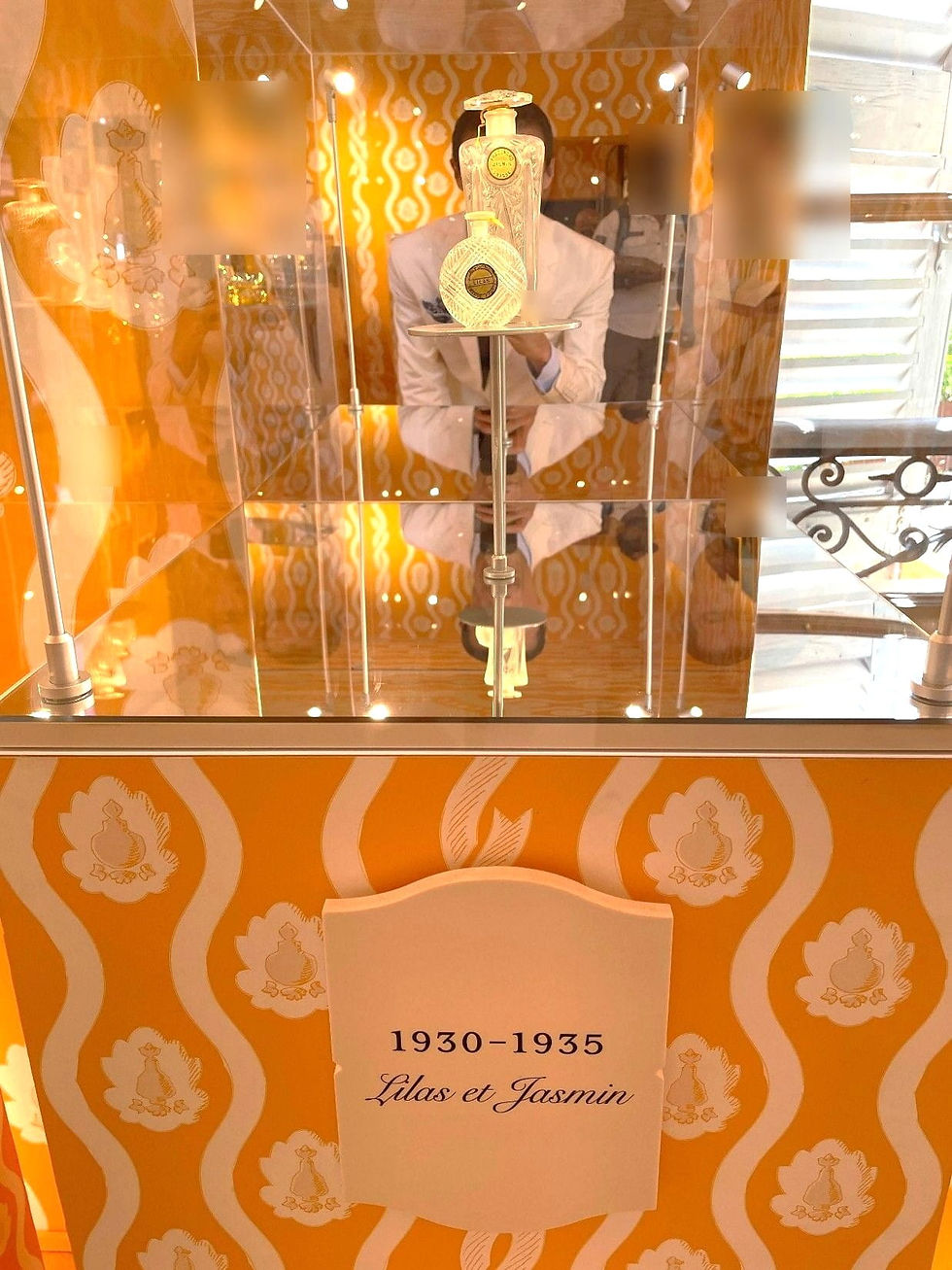
Created to celebrate Fragonard’s centenary, this temporary exhibition is housed within two salons at the Historic Factory in the centre of Grasse. Founded in the town in 1926, Fragonard remains a family-owned perfume house with a deep connection to the region. Designed by Ateliers Saint-Lazare, the exhibition is presented as an immersive and sensory journey through the history of the maison. The scenography combines colour, material, and fragrance in a luminous celebration of Provençal art de vivre.

The two salons are enveloped in the maison’s signature citrus yellow, inspired by the traditional façades of Grasse’s buildings. With graphic patterns that resemble waves and delicate leaves, they extend across the walls and floors in contrasting monochromatic tones. The result is bold, joyful, and theatrical, allowing visitors to experience the Fragonard universe through both sight and scent. The salon nearest the entrance presents ten of the maison’s iconic perfumes, tracing its fragrance history from earlier creations to more contemporary releases. Among them is “L’Oranger”, a centenary fragrance launched in 2026 as a tribute to orange blossom, one of the most recognisable floral signatures associated with the region and the maison.


The perfumes are displayed in individual showcases along the walls, while the centre of the salon is devoted to the work of French-Tunisian artist Shourouk Rhaiem. For this collaboration, the artist transformed Fragonard perfume bottles, packaging, magazines, and candle boxes into dazzling sculptural objects covered with Swarovski crystals and rhinestones. Their vivid colours and shimmering surfaces immediately draw the eye, yet the works are more than decorative showpieces; they demonstrate how fragrance packaging can become an object of artistic expression, bringing together perfumery, craftsmanship, fashion, and contemporary art in a playful and unexpected manner.


The second salon offers a more intimate look at the history of the family-owned house; it presents portraits of the founding family and archival material that reveal how the maison’s story has developed across generations. These images lend a human dimension to the exhibition, reminding visitors that behind the perfume bottles is a family legacy shaped by continuity, dedication, and a lasting relationship with Grasse. At the centre of this salon, a selection of books is arranged within a specially decorated display topped with large white paper flowers. Naturally, I was delighted to see the copy of “Fragonard: The Perfume of Provence” among them; its presence felt especially meaningful, given the role that book had played in inspiring my visit.


The exhibition also includes an olfactory experience, with scent vessels allowing visitors to explore several of the maison’s characteristic themes, including jasmine and orange blossom. This sensory element makes the history feel more immediate. Rather than simply reading about the past, one can experience the ingredients and impressions that have helped define the identity of Grasse and its perfumery tradition. Together, these two salons offer a brief but engaging journey through a century of fragrance. The exhibition does not attempt to overwhelm visitors with an encyclopaedic history; instead, it creates a carefully composed atmosphere in which family photographs, iconic perfumes, contemporary art, books, and scent come together to tell a story of heritage and imagination.


For me, the visit was also a way of travelling back through time. In these thoughtfully decorated rooms, the history of the maison becomes closely connected with the wider story of Grasse: its flower growers, its perfume makers, its artisans, and the generations of families who have preserved its savoir-faire.

Whether Grasse is worth visiting will naturally depend on one’s interests and expectations. For perfume enthusiasts and connoisseurs, however, the town offers something far more significant than a picturesque stop on the French Riviera. It provides an opportunity to connect with the origins, materials, and traditions behind French perfumery. To visit Grasse is to appreciate fragrance not merely because it smells beautiful, but because it is also a work of art — one that combines nature, craftsmanship, memory, and emotion. For anyone who regards perfume as a cultural expression rather than simply a beauty product, this exhibition offers a meaningful way to deepen that appreciation.

“Fragonard: 100 Years of Perfume” exhibition runs from now until 18th October 2026 at the Historic Factory of Fragonard in Grasse. Admission is free, no reservation is required, and the exhibition is open daily. If you have been waiting for a reason to discover Grasse — or to return to it — this centenary exhibition may be an interesting one. It offers a final glimpse into a century of perfumery while celebrating the enduring spirit of a town, whose identity has been shaped by flowers, fragrance, and French savoir-faire.