
A taste of presidential elegance - La Maison Élysée museum, Paris

Dear readers, beyond celebrated institutions such as the Louvre and the Musée d’Orsay, Paris is home to a constellation of historic and cultural museums scattered throughout the city. Some occupy grand, monumental buildings; others are considerably more intimate; yet each offers its own distinctive collection, atmosphere, and story, often shaped by the former owners and occupants of the premises. For visitors who find the scale of Paris’ larger museums somewhat overwhelming, there are gentler alternatives: places where French history and culture can be discovered at a more leisurely pace, perhaps with a pastry, a coffee, and a thoughtfully chosen souvenir along the way; and La Maison Élysée museum is one such address.

I discovered this relatively new Parisian museum by chance and have remained intrigued by its elegant interpretation of the Élysée Palace — the official residence and workplace of the President of the French Republic. Through historical objects, immersive technology, a café and a boutique, this museum offers visitors an accessible glimpse into the ceremonial world of the French presidency without requiring access to the palace itself. Located right opposite the Élysée Palace at 88 rue du Faubourg Saint-Honoré in Paris’ 8th arrondissement, La Maison Élysée was inaugurated by President Emmanuel Macron and Brigitte Macron in 24th July 2024; it later opened to the public in 30th July 2024. The 600-square-metre venue extends across two floors and combines a museum, café, and a shop. Rather than presenting the Élysée Palace solely as a political institution, La Maison Élysée also explores its character as a French maison — a place associated with elegance, ceremony, craftsmanship and hospitality. Its atmosphere is grand yet approachable, conveying a sense of prestige, discipline, and restraint without becoming excessively formal.


The museum’s interiors were designed with the participation of Maison Sarah Lavoine, whose studio is known for its work across high-end residential and hospitality projects. The crisp white setting, touched by subtly neoclassical details, welcomes visitors with a majestic chandelier from Mobilier National, a monumental mirror, and a white-marble, gilded semicircular neoclassical-style table decorated with an elegant floral arrangement. On the opposite side, a black wrought-iron staircase leads towards the café upstairs. Together, these details reinterpret the historic elegance of the Élysée in a contemporary and distinctly Parisian manner.
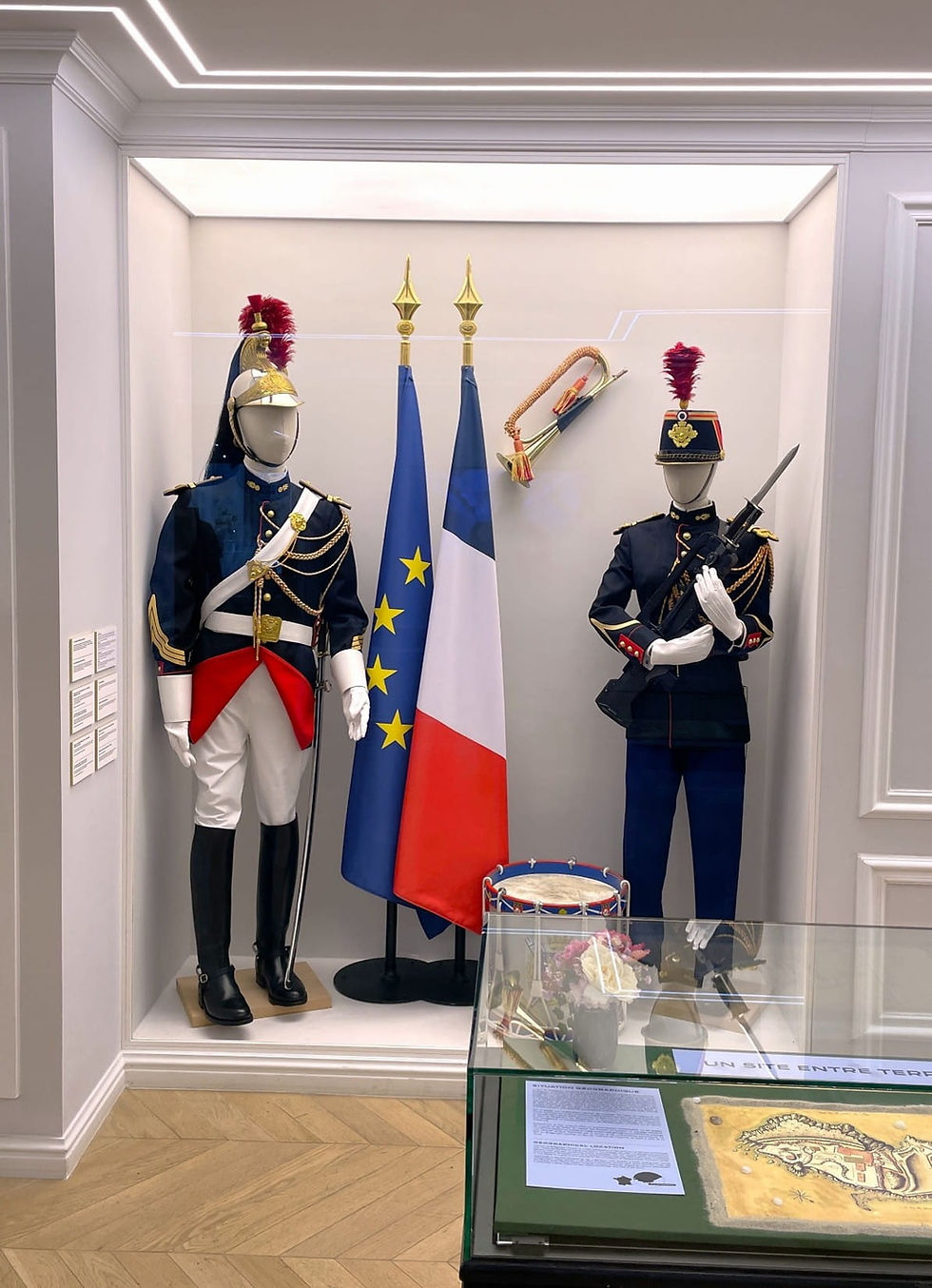

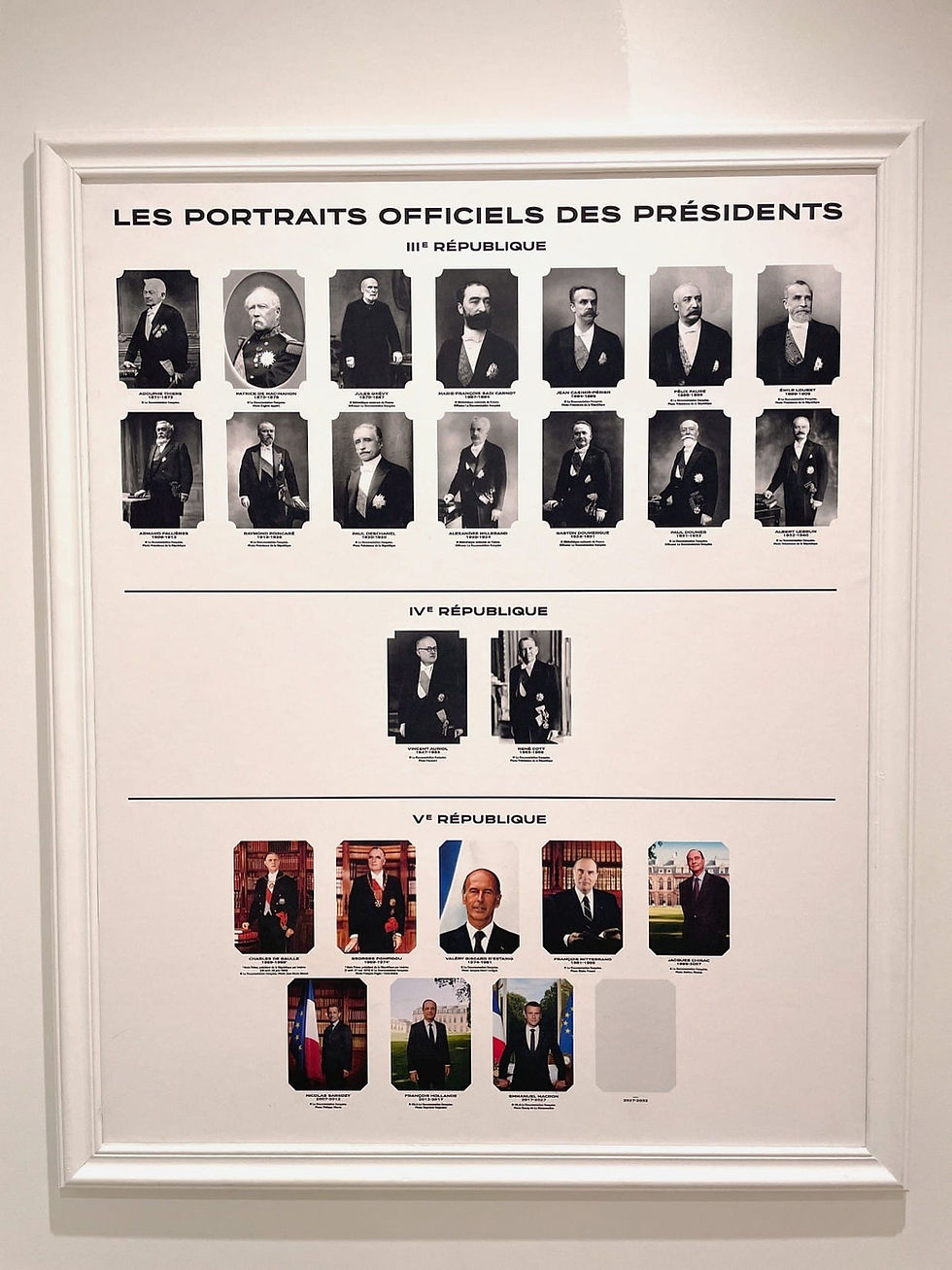
After passing through the boutique on the ground floor, visitors reach the museum section, where two mannequins dressed in Republican Guard uniforms mark the entrance. The exhibition continues with a miniature model of the Élysée Palace and an immersive cinema space presenting the history and evolution of the building, which dates back nearly three centuries, with the presentation narrated by French television host and historian Stéphane Bern.


One of the museum’s highlights is the Salon doré, a recreation of the presidential office associated with the modern Élysée Palace. Among the objects on display is the desk used by General Charles de Gaulle, France’s first president under the Fifth Republic. The exhibition then turns to the palace’s table service and protocol, offering a closer look at the exquisite tableware, silverware, and settings used when the French president receives distinguished guests and foreign heads of state. The displays reveal the delicate patterns, colors, and designs that define French ceremonial style, while also explaining the protocols, service, and menus associated with official occasions. This is not merely a presentation of beautiful objects; it is an introduction to the rituals of diplomacy and to the French art of entertaining at its most formal and polished form.


Further along, a cabinet of curiosities presents diplomatic gifts offered by foreign nations, including objects such as a wooden sculpture from Mozambique and gaucho spurs from Chile. Together, these gifts reflect the gestures of friendship, gratitude and cultural exchange that form part of international diplomacy.

After the historical and ceremonial displays, the café upstairs offers a more relaxed expression of presidential style. Its interior follows the museum’s crisp white aesthetic, softened by furniture upholstered in a rich cobalt-blue fabric. To me, the palette recalls President Macron’s familiar formal wardrobe: a neatly tailored navy suit, a white shirt and an understated deep navy tie; the effect is simple but striking — a discreet expression of modern French masculine elegance. The café’s most distinctive feature is its colored glass ceiling, composed of small rectangular panels in red, white and blue. The design takes inspiration from the translucent vinyl-filtered glass roof of the Jardin d’Hiver inside the Élysée Palace. Entitled Pavoisé, the installation was created by the French conceptual artist Daniel Buren. The vivid tricolor ceiling brings energy to the otherwise restrained interior, creating an inviting setting where one can enjoy a Parisian pastry or a light meal.


The café serves seasonal savory dishes, beverages, and pastries prepared under the direction of Fabrice Desvignes, the President’s chef, who holds the titles of Meilleur Ouvrier de France and Bocuse d’Or winner. The café’s pastry offering includes creations inspired by the Élysée Palace and by French culinary craftsmanship. Among the named pastries are the Faubourg Saint-Honoré, made with fine chocolate; the Pompadour, a puff pastry filled with vanilla custard and finished with a smooth vanilla cream; and my personal choice, the Jardin d’Hiver (“winter garden” in English). Inspired by the palace’s eponymous salon, this pastry combines lemon, yuzu, and pistachio beneath a bold tricolor glaze that echoes the glass ceiling of Jardin d’Hiver inside the Élysée Palace. Delicate and beautifully presented, the pastries add an indulgent touch to the museum visit and offer a taste of contemporary French art de vivre.


The café also offers macarons created in collaboration with the renowned French patisserie and confectionery house, Pierre Hermé Paris; each piece features an artistic brushstroke pattern in the colors of the French flag, with flavors including Corsican lemon cream, vanilla ganache made with vanilla from New Caledonia, and orange blossom from Grasse. These small Parisian confections pair naturally with tea, coffee, or even a glass of champagne; these special edition macarons are also available in a specially designed, chic gift box decorated with the French tricolor and Maison Élysée branding, which is only available in the museum boutique and selected Pierre Hermé retail outlets in Paris, making them an appealing way to take home a little of the experience.


Before leaving, it is worth visiting the boutique, especially if one would like to do some shopping for Parisian souvenirs. Ranging from accessories and food to homeware, books, candles, and fashion-related pieces, a curated selection is made in France and created or co-created with the Élysée brand. The result is more considered than the usual souvenir-shop offering: visitors can take home something connected to French craftsmanship, design and national heritage. Visiting La Maison Élysée museum is free, and it only takes a relatively short time to complete the entire visit, although visitors may wish to allow additional time for the café and boutique. The café accepts reservations through TheFork, and booking is recommended.


Although the Élysée Palace itself is not ordinarily open as a conventional public museum, La Maison Élysée provides an accessible introduction to its history, symbolism and ceremonial culture. It offers a glimpse into the spaces, objects and traditions associated with the French presidency, while remaining compact enough to visit without sacrificing an entire day. For those who seek something more distinctive than luxury shopping or the usual Parisian landmarks, this elegant museum-café-shop offers another way to experience the capital. It is a concise yet memorable encounter with French history, craftsmanship, and presidential art de vivre that is served with a delicate French pastry and a touch of tricolor sophistication.